
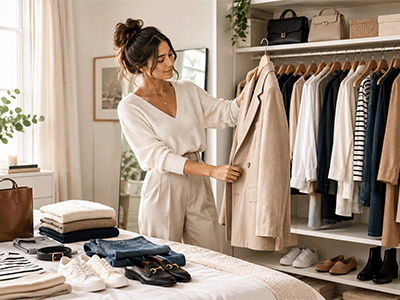
A capsule wardrobe sounds simple: own fewer clothes, create more outfits, and make getting dressed easier.But if you've ever searched for capsule wardrobe advice online, you've probably noticed something else. Many guides come with strict rules about exactly how many pieces you should own and which items every woman supposedly needs.That's where things can get complicated.Your lifestyle, personal style, body, climate, work routine, and budget are different from someone else's. So your capsule wardrobe shouldn't look exactly like theirs.
The most useful capsule wardrobe is not necessarily the smallest one. It's the one made up of clothes you genuinely like, feel comfortable wearing, and can combine easily with the rest of your wardrobe.In this guide, we'll look at how to build a capsule wardrobe around your real life—not someone else's checklist.
What Is a Capsule Wardrobe?
A capsule wardrobe is a collection of clothing designed to work together, giving you multiple outfit options without requiring an oversized closet.The idea isn't simply to own fewer clothes.It's to make the clothes you own more useful.A well-designed capsule wardrobe can help you: Get dressed more easily Reduce unnecessary shopping Create more outfits from existing pieces Identify genuine gaps in your wardrobe Avoid buying clothes you rarely wear Make better use of your favorite pieces Spend more intentionally
There is no universal number of pieces that makes a wardrobe a capsule wardrobe. Some people may be comfortable with a relatively small collection, while others need more clothing because of work, travel, weather, hobbies, or lifestyle.
The goal is not to hit a number. The goal is to build a wardrobe that works.
Why Traditional Capsule Wardrobe Rules Don't Work for Everyone
Many capsule wardrobe guides rely on fixed formulas: a specific number of tops, trousers, dresses, shoes, and jackets.These lists can be useful as inspiration, but they can also create a problem when they're treated as universal rules.The Femiure research found a documented criticism of rigid capsule wardrobe advice: traditional formulas can assume a particular personal style, body type, and budget. Readers may benefit more from a flexible framework than from a fixed list of supposedly essential pieces.
For example, someone who works from home most days may have very different wardrobe needs from someone who works in a formal office.Someone who loves color may not want a wardrobe dominated by neutrals.Someone who lives in a warm climate doesn't need the same layers as someone dealing with cold winters.And someone on a tight budget shouldn't feel pressured to replace their entire wardrobe just to follow a capsule formula.
Instead of asking:
"What 30 pieces should every woman own?"
Ask:
"What clothes do I actually need for the life I live?"
That question gives you a much better starting point.
Step 1: Start With Your Lifestyle
Before buying anything, look at how you actually spend your time.Take a typical week and identify the situations you regularly dress for.
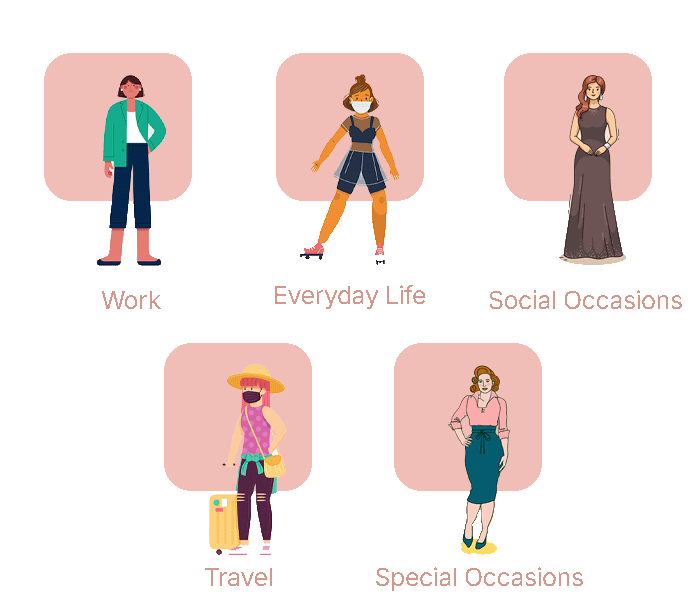
Work
Do you work in an office, from home, in a creative environment, or somewhere with a formal dress code?Your work environment should influence how much of your wardrobe is dedicated to professional clothing.
Everyday Life
Think about the clothes you need for errands, appointments, casual lunches, coffee runs, working from home, or spending time with friends and family.
Social Occasions
Consider dinners, birthdays, date nights, celebrations, and other events you attend regularly.
Travel
If you travel frequently, your wardrobe may need versatile layers, comfortable shoes, easy-to-pack clothing, and pieces that can work across multiple outfits.
Special Occasions
You may also need a few pieces for weddings, formal dinners, work events, or other occasions.
The important thing is to build around your actual calendar.
Your lifestyle should determine your capsule wardrobe—not the other way around.
Step 2: Audit the Clothes You Already Own
One of the biggest mistakes people make when building a capsule wardrobe is starting with a shopping list.
Start with your closet instead.
You may already own most of what you need.
Go through your clothes and divide them into four simple groups:
1. Clothes You Wear Often
These are the pieces you reach for without thinking.They are valuable clues because they show what actually works for you.
2. Clothes You Wear Sometimes
These may work well for specific occasions, seasons, or combinations.Don't remove them simply because you don't wear them every week.
3. Clothes You Rarely Wear
Ask yourself why.
Is the fit uncomfortable? Is the color difficult to style? Is the fabric impractical? Or do you simply prefer other pieces?
4. Clothes You Don't Wear
These are the pieces worth examining most closely.
You don't necessarily have to throw them away immediately. First understand why they're being ignored.
Your most-worn clothing can tell you more about your personal style than any online capsule wardrobe checklist.
Step 3: Identify Your Most-Worn Wardrobe Categories
Look at the clothes you repeatedly choose.
You may discover that you naturally prefer:
- Jeans and simple tops
- Dresses
- Wide-leg trousers
- Blazers
- Knitwear
- Sneakers
- Loafers
- Comfortable flats
- Neutral colors
- Bright colors
- Prints
- Relaxed silhouettes
Don't treat these preferences as problems that need correcting.
They're information.
Your capsule wardrobe should make it easier to wear the styles you already love.
Step 4: Build Around Versatile Pieces
Once you've identified your most-used categories, look for pieces that can work in several different outfits.
A versatile piece doesn't necessarily have to be neutral or basic.
It simply needs to work well with other things you already own.
Think in Outfit Combinations
Instead of asking:
"Do I need another top?"
Ask:
"How many outfits can I naturally create with this top?"
For example, one blouse might work with:
- Jeans for a casual outfit
- Trousers for work
- A skirt for dinner
- A blazer for a more polished look
This way of thinking helps you evaluate clothing as part of your wardrobe rather than as an isolated purchase.
Step 5: Create Your Core Wardrobe Categories
Your exact categories will depend on your lifestyle, but most wardrobes can be organized into a few broad groups.
Tops
Consider the tops you actually enjoy wearing:
- T-shirts
- Shirts
- Blouses
- Tank tops
- Sweaters
- Cardigans
You don't need every type.
Choose the ones that fit your lifestyle and work with your other clothes.
Bottoms
Your bottoms might include:
- Jeans
- Trousers
- Skirts
- Casual pants
- Shorts
Choose silhouettes you genuinely feel comfortable wearing.
Dresses
If you love dresses, include them.
A capsule wardrobe doesn't require you to replace dresses with separates.
A versatile dress can work for everyday wear, dinners, travel, or special occasions depending on how you style it.
Layers
Layers can dramatically increase the usefulness of your wardrobe.
Consider:
- Blazers
- Cardigans
- Lightweight jackets
- Sweaters
- Coats
The right layer can change the look and function of an outfit without requiring a completely different wardrobe.
Shoes
Choose shoes according to what you actually do.
You might need:
- Everyday sneakers
- Work shoes
- Comfortable flats
- Boots
- Occasion shoes
Comfort and practicality should matter as much as appearance.
Accessories
Accessories can help you create variety without adding large amounts of clothing.
Depending on your style, this might include:
- Belts
- Jewelry
- Scarves
- Sunglasses
- Handbags
Step 6: Build Your Capsule Around Your Personal Style
Your exact categories will depend on your lifestyle, but most wardrobes can be organized into a few broad groups.
A capsule wardrobe doesn't have to mean wearing beige, black, white, and navy every day.
If you love color, keep color.
If you love prints, keep prints.
If you prefer minimalist clothing, build around minimalist pieces.
If you love feminine dresses, make them part of your wardrobe.
The purpose of a capsule wardrobe is to make your wardrobe easier to use—not to remove the personality from it.
If You Love Neutrals
You can create combinations around colors such as black, white, cream, navy, gray, brown, or camel.
If You Love Color
Use reliable neutrals as supporting pieces while allowing your favorite colors to become the focus.
If You Love Prints
Pair statement prints with simpler pieces that allow them to stand out.
Remember:
A capsule wardrobe can be small without being boring.
Step 7: Make Fit and Comfort Non-Negotiable
A piece may look versatile on paper and still fail in your real wardrobe if you don't feel comfortable wearing it.
A blazer that pulls across your shoulders isn't useful simply because blazers are considered a wardrobe essential.
A pair of jeans that you constantly adjust may not become a favorite just because the label says they're your usual size.
When evaluating a piece, ask:
> Does it fit comfortably?
> Can I move easily?
> Do I like how it feels?
> Does the silhouette work for my proportions?
> Would I choose to wear it again?
> Can I comfortably wear it for the situation I bought it for?
A capsule wardrobe only works when you actually want to wear the clothes inside it.
Step 8: Build Your Capsule Around Your Budget
A capsule wardrobe shouldn't require you to replace your entire closet.
In many cases, the most useful first step is identifying what you already have and what is genuinely missing.
Create three lists:
Need Now
Items that fill a genuine gap in your wardrobe.
Replace Later
Pieces you wear frequently but that are worn out, damaged, or no longer functional.
Nice to Have
Things you would enjoy owning but don't actually need right now.
This simple separation can prevent a capsule wardrobe from becoming another reason to shop.
Step 9: Try the Three-Outfit Test Before Buying
Before buying something new, see whether you can immediately think of at least three outfits using clothes you already own.
For example:
New blouse
→ Jeans + sneakers
→ Trousers + loafers
→ Skirt + flats
If you can create several natural combinations, the piece has a better chance of becoming part of your regular rotation.
If you need to buy a new pair of shoes, a new bag, a new jacket, and new trousers just to make one item work, pause.
The problem may not be your wardrobe. It may be the purchase.
Step 10: Find the Gaps in Your Wardrobe
Once you've worn your existing clothes for a while, you'll start noticing patterns.
Maybe you have plenty of tops but very few bottoms that you enjoy wearing.
Maybe you have work clothes but nothing suitable for casual dinners.
Maybe you have great summer pieces but no practical layers.
These are genuine wardrobe gaps.
Instead of shopping based on what looks appealing online, shop based on what your wardrobe is actually missing.
This makes every purchase more intentional.
Step 11: Don't Force Yourself to Follow a Fixed Number
One of the easiest ways to make a capsule wardrobe stressful is to become obsessed with the number of pieces.
There is no magic number that works for every woman.
Your ideal wardrobe depends on:
- Lifestyle
- Climate
- Work requirements
- Personal style
- Laundry routine
- Travel frequency
- Budget
- Storage space
- Comfort preferences
Someone who lives in a four-season climate may naturally need more categories than someone living somewhere warm year-round.
Someone with a formal workplace may need more professional clothing.
Someone who works from home may need fewer formal pieces.
The right number is the number that allows you to live comfortably without feeling like you're constantly missing something.
Step 12: Give Your Capsule Wardrobe Time to Evolve
Don't expect to create your perfect capsule wardrobe in one afternoon.
Wear your clothes.
Observe what happens.
After a few weeks, ask yourself:
# What do I keep reaching for?
# What haven't I worn?
# Which outfits feel easiest?
# What combinations don't work?
# What am I constantly missing?
# Which pieces feel uncomfortable?
# What do I wish I owned?
Your actual behavior is more useful than a theoretical wardrobe formula.
A capsule wardrobe should evolve as your life evolves.
What to Do With Clothes Outside Your Capsule
Not every item needs to be part of your everyday rotation.
You may have clothes that are:
- Seasonal
- Occasion-specific
- Sentimental
- Travel-specific
- Experimental
- Rarely needed but still useful
You can store or separate these pieces without immediately getting rid of them.
The purpose of a capsule wardrobe isn't to force yourself to own as little as possible.
It's to make your most useful clothes easier to access and wear.
A Simple Capsule Wardrobe Checklist
Before considering your capsule wardrobe complete, ask yourself:
Lifestyle
Personal Style
Fit & Comfort
Versatility
Budget
If your answers are mostly yes, you're moving in the right direction.
The Femiure Approach to Capsule Wardrobes
A capsule wardrobe shouldn't be another set of rules telling you what you should own.
It should be a framework for understanding what you actually need.
Start with your lifestyle.
Look at what you already wear.
Identify the pieces that work.
Pay attention to fit and comfort.
Build around your personal style.
Then fill genuine gaps slowly and intentionally.
You don't need exactly 30 pieces.
You don't need an entirely neutral wardrobe.
You don't need to replace everything you own.
And you don't need to make your closet look like someone else's.
The best capsule wardrobe is simply the one that makes getting dressed easier—and makes you want to wear what you already own.
Frequently Asked Questions
How many clothes should be in a capsule wardrobe?
There is no universal number. Your ideal capsule wardrobe depends on your lifestyle, climate, work requirements, personal style, laundry routine, and budget. Focus on usefulness and outfit combinations rather than reaching a specific number.
What are the essential pieces in a capsule wardrobe?
There isn't one universal list of essential pieces. Start with the categories you actually use, such as tops, bottoms, layers, dresses, shoes, and outerwear, then choose pieces that fit your lifestyle and work together.
Can a capsule wardrobe include bright colors?
Absolutely. A capsule wardrobe doesn't have to be neutral. If you love color, build your wardrobe around your favorite colors and use versatile pieces to create combinations.
Can a capsule wardrobe work on a small budget?
Yes. Start with what you already own and identify genuine gaps before shopping. Prioritizing the pieces you will wear frequently can help you avoid unnecessary purchases.
Does a capsule wardrobe have to be minimalist?
No. A capsule wardrobe is about creating a more intentional and useful collection of clothing. You can have a colorful, feminine, classic, trendy, or eclectic personal style while still using a capsule approach.
How often should I change my capsule wardrobe?
There is no fixed schedule. You can adjust it seasonally, when your lifestyle changes, or whenever you notice that certain pieces are no longer serving your needs.
Final Thought
A smaller wardrobe isn't automatically a better wardrobe.
A better wardrobe is one that fits your life, reflects your style, feels comfortable, and gives you enough options without making getting dressed unnecessarily complicated.
Build your capsule around the woman you actually are—not the woman a checklist assumes you should be.